
镜子超人
不到半价!RTX 5060 Ti清仓价1627元 有人捡到了_我的网站

A |
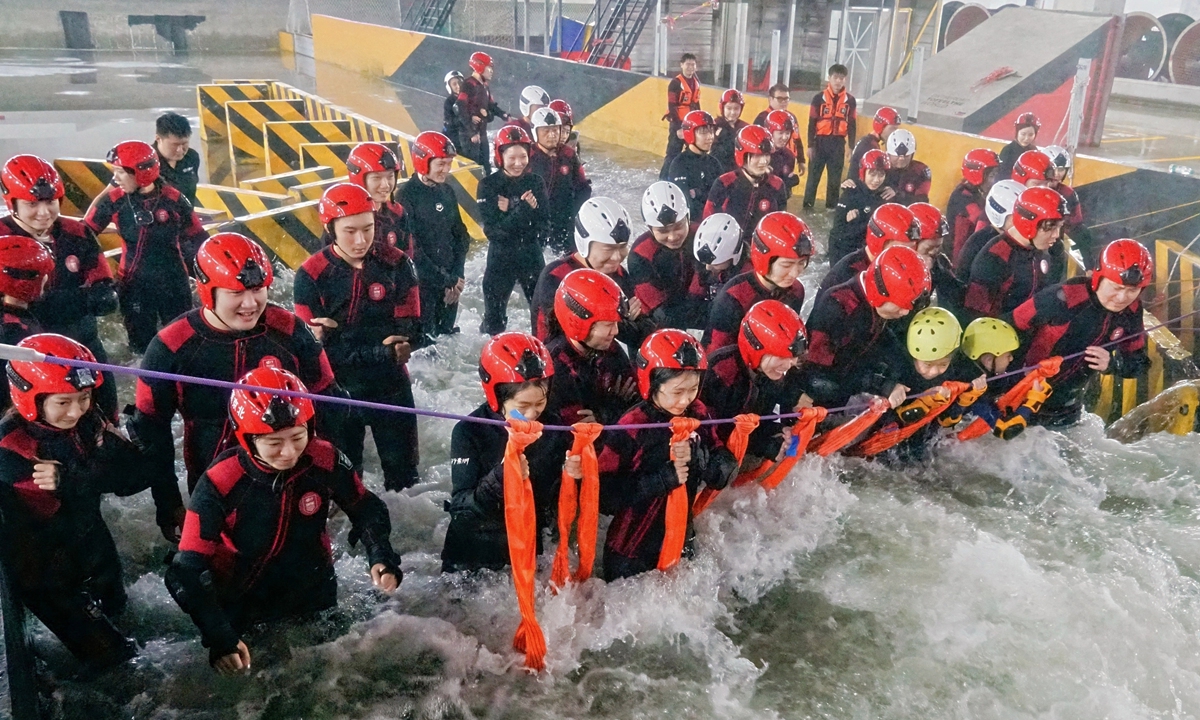
As heavy rain associated with Typhoon Dolphin continued to affect large parts of China, an increasing number of people were turning to immersive disaster simulations to experience extreme weather scenarios in a controlled environment at the Lvxing Disaster Simulation Training Center in Hangzhou, East China's Zhejiang Province.
At the country's first natural disaster simulation venue, adult participants pay 899 yuan ($133) per person to virtually confront situations such as typhoons, urban flooding and sudden flash floods, to gain a sense of what such emergencies might feel like.
Wang Kuanghan, operator of the training center, told the Global Times that the center is designed to allow people to experience the dangers of natural disasters in a safe and controlled environment, while raising awareness of the need to respect nature and avoid potential risks.
"We hope to pass on the experience we gained from encountering natural disasters during our years of traveling around the world," Wang said. "Beyond teaching people how to respond when natural disasters strike, what is more important is cultivating an awareness of how to avoid risks."
As of July, the center had received more than 70,000 visits this year for hands-on experiences, including tourists as well as companies and professional rescue teams that come for training. The number is higher than the same period in 2025, he noted.
Fu Minya, a Hangzhou-based office worker, told the Global Times that she has heard of the center and would like to give it a try.
"The frequent news reports of natural disasters in recent weeks have reminded people of how small and vulnerable we are in the face of nature's forces," she said.
After Typhoon Dolphin made landfall in China in early August, its remnant impact brought downpours to several provinces. Chinese authorities previously earmarked 80 million yuan to support flood and geological disaster relief efforts in the Central China's Henan and Hubei provinces and East China's Anhui Province, the Xinhua News Agency reported.
The flash flood simulation is one of the most intense experiences the center offers. Participants stand in a simulated river channel as an instructor presses a button, releasing around 500 tons of water from above. Within just three seconds, many participants are knocked off their feet, left tumbling in the rushing water and being swept toward the protective wall at the end of the channel.
"Real flash floods move even faster," said Wang. "When the water rises above knee level, it is almost impossible for an adult to remain standing. Many people instinctively think they should swim to escape, but that can be fatal."
Flash floods carry mud, branches and rocks that can quickly entangle your arms and legs. The right thing to do is to watch for warning signs of an impending flash flood, move away from the riverbank before the flash flood occurs, and quickly evacuate to higher ground on either side, he said.
In another exercise, several participants slog ahead holding each other's arms as the facility simulates winds reaching speeds of up to 165 kilometers per hour, as well as torrential rain.
However, there are concerns that simulated disasters could trivialize the suffering of disaster victims and turn the trauma of real-life disasters into entertainment.
This is a promising new niche in urban cultural tourism, Yu Jinlong, a Beijing-based cultural scholar, told the Global Times on Wednesday.
By striking the right balance between entertainment and public education while strictly adhering to safety protocols, such facilities can become more than just viral check-in destinations; they can serve as a replicable platform for public emergency education, Yu noted.
In the past, disaster-prevention education largely relied on display boards and lectures, which often made it difficult for people to develop an intuitive understanding of the dangers involved, Yu said.
Real-life simulations, by contrast, allow participants to experience firsthand the destructive force of typhoons and flash floods, turning abstract knowledge into tangible memories. This is where such facilities can offer unique social value, making them particularly suitable for educational programs for young people and emergency-response training for businesses and institutions, he said.
The experience can be impactful, but it should not be reduced to a sensationalist spectacle. Only by combining immersive experiences with practical self-rescue training and maintaining strict safety standards can this emerging model continue to serve as a meaningful platform for public disaster-prevention education, Yu noted.
Statistics show that 95 percent of people rescued from natural disasters survive through self-rescue, Wang said. "If you are swept away by water or hit by strong winds here, you will develop a much deeper understanding of how to respond to hazards and protect yourself."
。 8月25日消息,Reddit用户u/enigmussnake在沃尔玛(Walmart)清仓区以242美元(约合1627元人民币)买到一张微星RTX 5060 Ti 8GB显卡,含税总价约266美元(约合1788元人民币),不到当前市价的一半。 这张卡在Newegg等主流电商上的售价普遍在499到540美元(约合3355到3631元人民币)之间,即便是NVIDIA去年发布时的建议零售价也要379美元(约合2548元人民币)。 242美元的清仓价相当于打了不到四折,对比当前行情更是省了一半以上。 背景是内存短缺持续推高显卡价格,RTX 5060 Ti 8GB发布之初就因显存偏少被玩家吐槽,但在当下8GB显卡都跟着涨价的市场里,这个价格买到一张能用的亮机卡反而成了香饽饽。 原帖在r/gpu社区引发热议,不少网友表示这种好事怎么轮不到我。 这不是沃尔玛清仓区第一次出现显卡捡漏,今年早些时候,另一位Reddit用户曾在另一家沃尔玛以80美元(约合538元人民币)的价格买到RTX 5060 Ti,疑似系统定价错误。 两次事件指向同一个现象,大卖场的清仓区偶尔会出现与市场行情脱节的GPU定价,懂行的玩家蹲到了就是赚到。
【本文结束】如需转载请务必注明出处:
责任编辑:知微
文章内容举报
。Current article:http://noj3i8.kuaibenfanzhuakainenpimiuca.buzz/list_ipsz9/7x27.html
Published on:01:04:36